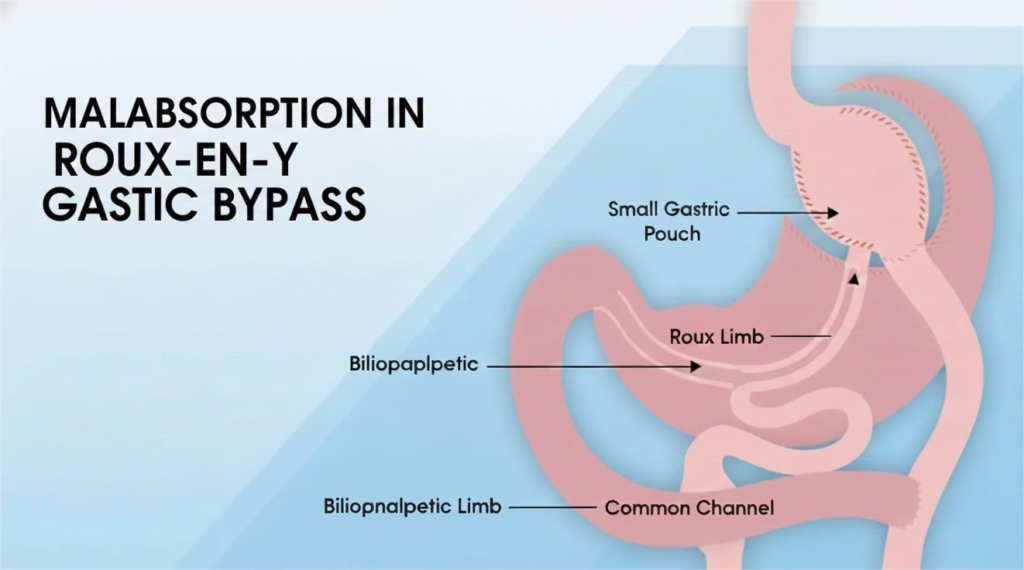
For those considering Roux-en-Y Gastric Bypass (RNYGB), understanding its effects, especially malabsorption, is essential. While this highly effective weight-loss surgery offers numerous benefits, it also requires long-term dietary and nutritional adjustments. Let’s explore what malabsorption means in the context of RNYGB, how it impacts your body, and what steps you can take to ensure optimal health post-surgery.
What Is Malabsorption in RNYGB?
Malabsorption occurs when your body cannot fully absorb the nutrients from the food you eat. In the case of RNYGB, this is by design. The procedure alters your digestive system by:
Creating a Small Stomach Pouch: The stomach is divided, leaving a small pouch that limits the amount of food you can eat.
Bypassing a Portion of the Small Intestine: The small intestine is rerouted, which reduces calorie and nutrient absorption.
While this change is essential for significant weight loss, it also introduces the risk of nutritional deficiencies. At the Tampa Weight Loss Institute, Dr. Amit Taggar and his expert team prioritize educating patients about these changes, ensuring they are prepared for life after surgery.
How Does Malabsorption Affect Your Body?
The bypassed portion of the small intestine is responsible for absorbing key nutrients, including:
Iron and Calcium: Vital for bone health and preventing anemia.
Vitamin B12: Crucial for nerve function and red blood cell production.
Fat-Soluble Vitamins (A, D, E, and K): Important for vision, bone strength, and immune health.
Over time, if these nutrients are not properly supplemented, deficiencies can lead to symptoms such as:
Fatigue and weakness.
Brittle bones or fractures (osteoporosis).
Neurological issues, including tingling in the extremities.
Managing Malabsorption: What You Need to Know
At the Tampa Weight Loss Institute, Dr. Taggar emphasizes that malabsorption doesn’t mean inevitable complications. With proper care and commitment, most patients maintain excellent health. Here’s how:
1
Follow a Supplementation Plan
Daily supplements are non-negotiable after RNYGB.
You’ll likely need:
A Multivitamin: Formulated specifically for bariatric patients.
Calcium Citrate: Easier to absorb than other forms of calcium.
Vitamin D and Iron: To support bone and blood health.
Vitamin B12: Either as a tablet, sublingual drop, or injection.
2
Prioritize Protein
Protein should be the cornerstone of your meals. It supports healing, muscle maintenance, and overall energy. Aim for 60-80 grams of protein daily, sourced from lean meats, eggs, dairy, or plant-based options.
3
Routine Lab Monitoring
Regular blood tests ensure that deficiencies are identified early. Dr. Taggar advises scheduling lab work every 3-6 months during the first year post-surgery and annually thereafter.
4
Work with a Dietitian
The dietitians at Tampa Weight Loss Institute are here to help you navigate your new diet. From meal planning to troubleshooting food intolerance, they’ll be your trusted partner.
Benefits of RNYGB Despite Malabsorption
While malabsorption requires management, the benefits of RNYGB often far outweigh the challenges:
Sustained Weight Loss: Patients lose 60-70% of excess weight within the first year.
Resolution of Comorbidities: Conditions like type 2 diabetes, hypertension, and sleep apnea improve or resolve in most patients.
Improved Quality of Life: Increased mobility, confidence, and energy levels are common outcomes.
At Tampa Weight Loss Institute, patients report life-changing results under Dr. Taggar’s care. “This procedure isn’t just about weight loss; it’s about giving patients a second chance at health and happiness,” he shares.
Addressing Common Myths About Malabsorption
It’s natural to have concerns about life after surgery. Let’s address a few common misconceptions:
Myth: Malabsorption will make me sick all the time. Fact: With proper supplements and medical care, most patients enjoy vibrant health.
Myth: I’ll never eat normal food again. Fact: You’ll adapt to a new normal that focuses on nutritious, smaller portions.
Your Next Steps
If you’re ready to embrace a healthier lifestyle, Tampa Weight Loss Institute is here to guide you every step of the way. From your initial consultation to post-surgery care, Dr. Taggar and his team provide compassionate, evidence-based support tailored to your needs.
Take Action Today
Visit Tampa Weight Loss Institute to schedule your consultation. Together, we’ll help you achieve your weight-loss goals while maintaining a vibrant, healthy life.
This journey isn’t just about surgery, it’s about transformation, confidence, and reclaiming your health. Let Tampa Weight Loss Institute be your partner in achieving the life you desire.
The information provided on this website is for educational and informational purposes only and is not intended as medical advice. Always consult with a qualified healthcare provider regarding any medical concerns, conditions, or treatment options. Individual results may vary. The services described are not intended to diagnose, treat, cure, or prevent any disease. Any medical procedure should be discussed thoroughly with a licensed professional before beginning treatment.
Dr. Amit Taggar is a board-certified, fellowship-trained bariatric surgeon and the founder of Tampa Weight Loss Institute. Recognized globally for his expertise in robotic weight loss surgery, Dr. Taggar specializes in Roux-en-Y gastric bypass, vertical sleeve gastrectomy, duodenal switch, and complex bariatric revisions. He has trained surgeons from around the world and performed live surgical demonstrations at major international conferences.
Committed to empowering patients on their weight loss journey, Dr. Taggar emphasizes a comprehensive approach to long-term success, integrating advanced surgical techniques with personalized aftercare. At Tampa Weight Loss Institute, he leads a team dedicated to transforming lives through compassionate, patient-centered care.