Duodenal Switch vs. Roux-en-Y Gastric Bypass: Which Bariatric Surgery Is Right for You?

Are you looking into bariatric surgery and the options feel overwhelming?

You’re not alone! 

Understanding your options is the first step toward making a decision. Let’s do a comprehensive comparison of the duodenal switch and Roux-en-Y gastric bypass to help you make an informed choice.
While both surgeries stand out for their proven results in promoting weight loss and improving health and are designed to combat obesity and related health conditions, they differ in approach, benefits, and potential challenges.

At Tampa Weight Loss Institute, led by Dr. Amit Taggar, we aim to guide you through the decision-making process with personalized care and the most advanced techniques in bariatric surgery

What Is the Duodenal Switch?

The duodenal switch (DS) combines two powerful techniques: a sleeve gastrectomy (removal of part of the stomach to reduce its size) and an intestinal bypass (rerouting the small intestine to limit calorie absorption). This dual approach offers significant weight loss and metabolic benefits.

Key Benefits:

  • Higher Weight Loss: Patients typically lose up to 80% of their excess weight.
  • Improved Metabolic Health: Highly effective for treating Type 2 diabetes, hypertension, and high cholesterol.
  • Preserved Stomach Function: Unlike other surgeries, the pyloric valve remains intact, which helps regulate food movement and prevents dumping syndrome.

Potential Drawbacks:

  • Nutritional Deficiencies: Because it bypasses much of the small intestine, there’s a higher risk of vitamin and mineral deficiencies.
  • Digestive Issues: Some patients experience bloating, diarrhea, or foul-smelling stools due to malabsorption.

What Is Roux-en-Y Gastric Bypass?

The Roux-en-Y gastric bypass (RYGB) is one of the most popular and well-established bariatric surgeries. It involves creating a small stomach pouch and rerouting a portion of the small intestine to reduce calorie absorption.

Key Benefits:

  • Effective Weight Loss: Patients typically lose 60-70% of their excess weight.
  • Rapid Improvement in Health: Particularly effective for resolving Type 2 diabetes and sleep apnea.
  • Long-Term Results: With proper follow-up care, many patients maintain their weight loss for decades.

Potential Drawbacks:

  • Dumping Syndrome: A common side effect where food moves too quickly into the small intestine, causing nausea, cramping, and dizziness.
  • Stomach Pouch Issues: There’s a risk of the pouch stretching or developing ulcers over time.
  • Nutrient Deficiencies: Although less pronounced than with the duodenal switch, deficiencies in iron, calcium, and B vitamins are possible.
duodenal switch vs roux-en-y gastric bypass illustration

Comparing the Two Procedures

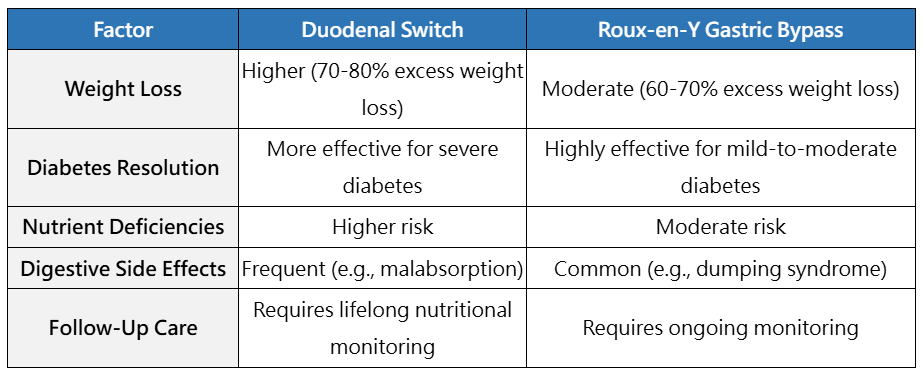
Here’s how the duodenal switch and Roux-en-Y gastric bypass compare across critical factors:

duodenal switch vs roux-en-y gastric bypass table

Who Is a Good Candidate for Each Procedure?

Choosing the right surgery depends on your specific health goals, lifestyle, and medical history. Here are some general guidelines:

1
Duodenal Switch:
Best for patients with a BMI over 50 or those requiring significant weight loss.
Ideal for individuals with severe obesity-related health conditions like diabetes and high cholesterol.
Suitable for patients committed to strict follow-up care and lifelong supplementation.
2
Roux-en-Y Gastric Bypass:
Best for patients with a BMI between 35 and 50.
Effective for individuals with conditions like GERD (gastroesophageal reflux disease) or mild-to-moderate diabetes.
Suitable for those seeking a proven, long-standing procedure with manageable dietary changes.

What to Expect After Surgery

Both procedures require significant lifestyle changes. Post-surgery, patients need to follow a carefully structured diet, prioritize hydration, and take supplements to prevent deficiencies.

At Tampa Weight Loss Institute, We Provide:

  • Personalized Care Plans: Tailored to your surgery type and individual health needs.
  • Nutritional Counseling: Ongoing guidance to ensure you meet your dietary requirements.
  • Expert Follow-Up Care: Regular check-ins with Dr. Amit Taggar and the team to monitor your progress and address any concerns.

Choosing between the duodenal switch and Roux-en-Y gastric bypass is a personal decision that requires expert guidance. 

Ready to transform your life? Schedule your FREE consultation today with Dr. Amit Taggar or call us to learn more about your options.

-Disclaimer-

The information provided on this website is for educational and informational purposes only and is not intended as medical advice. Always consult with a qualified healthcare provider regarding any medical concerns, conditions, or treatment options. Individual results may vary. The services described are not intended to diagnose, treat, cure, or prevent any disease. Any medical procedure should be discussed thoroughly with a licensed professional before beginning treatment.

Author

  • Dr. Amit Taggar Headshot

    Dr. Amit Taggar is a board-certified, fellowship-trained bariatric surgeon and the founder of Tampa Weight Loss Institute. Recognized globally for his expertise in robotic weight loss surgery, Dr. Taggar specializes in Roux-en-Y gastric bypass, vertical sleeve gastrectomy, duodenal switch, and complex bariatric revisions. He has trained surgeons from around the world and performed live surgical demonstrations at major international conferences.

    Committed to empowering patients on their weight loss journey, Dr. Taggar emphasizes a comprehensive approach to long-term success, integrating advanced surgical techniques with personalized aftercare. At Tampa Weight Loss Institute, he leads a team dedicated to transforming lives through compassionate, patient-centered care.