Roux-en-Y Gastric Bypass (RNYGB) vs. Duodenal Switch (DS): A Comparison
Are you ready to take control of your weight and health?
Choosing the right bariatric surgery could be the key to unlocking a new chapter in your life. At the Tampa Weight Loss Institute, we understand that selecting the best surgical approach for your weight loss journey is a big decision. Two of the most effective weight loss surgeries are Roux-en-Y Gastric Bypass (RNYGB) and Duodenal Switch (DS). But the question remains,
“Which one is right for me?”
Let’s break it down so you can make an informed decision with guidance from Dr. Amit Taggar, a renowned expert in bariatric surgery in Tampa.
Understanding the Basics: RNYGB and DS
Before diving into the details, it’s important to know how these procedures work:
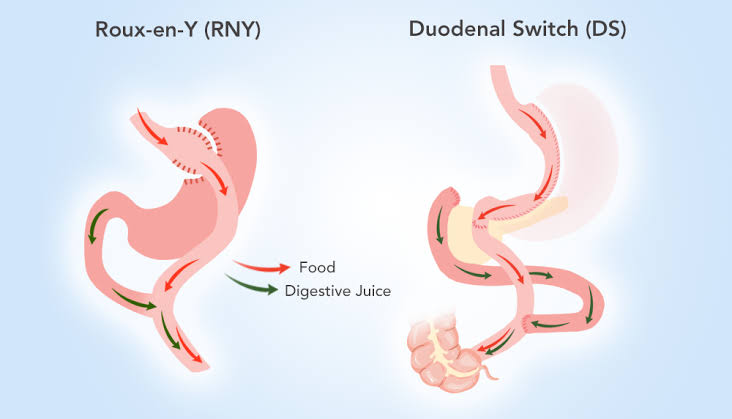
Roux-en-Y Gastric Bypass (RNYGB): Creates a small stomach pouch and bypasses a section of the small intestine, limiting both food intake and nutrient absorption. An excellent choice for patients seeking both weight loss and improvement in obesity-related health conditions.
Duodenal Switch (DS): Involves two steps; creating a smaller stomach pouch and bypassing a larger portion of the small intestine. The DS offers more dramatic weight loss results, particularly for patients with severe obesity, but requires greater commitment to post-operative care.
How RNYGB Helps You Lose Weight and Improve Health
Roux-en-Y Gastric Bypass is one of the most popular weight loss surgeries because of its proven track record. Here’s why it works:
1
Significant Weight Loss:
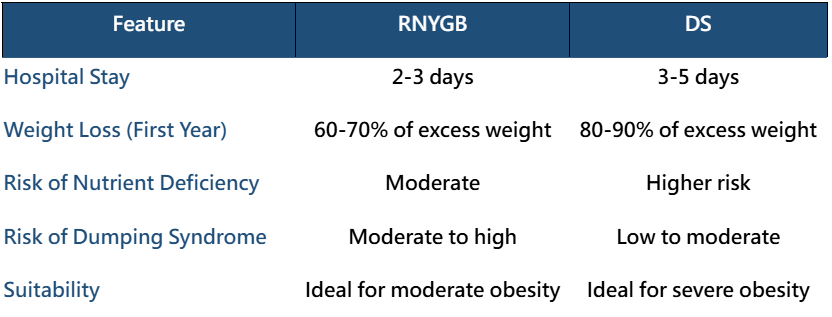
Most patients can lose 60-70% of excess weight in the first year after surgery. The procedure significantly reduces hunger and helps patients feel full after eating smaller portions, which promotes long-term weight loss.
2
Health Improvements
Beyond weight loss, RNYGB can resolve or improve conditions such as type 2 diabetes, hypertension, and sleep apnea. Research shows that up to 80% of patients see improvements in their metabolic health.
3
Shorter Recovery Time
Compared to other bariatric surgeries, RNYGB has a relatively short recovery time. Most patients are back to their normal activities within 2-3 weeks, making it a good choice for those looking to return to work quickly.
Benefits of Duodenal Switch (DS) for More Dramatic Weight Loss
1
Higher Weight Loss Potential
DS patients typically lose 80-90% of excess weight within the first year. This makes DS an appealing option for individuals with higher levels of obesity who need more significant weight loss.
2
Better Control of Metabolic Conditions
Like RNYGB, DS helps improve type 2 diabetes and high cholesterol. DS patients often experience better blood sugar control due to the greater bypass of the small intestine.
3
Reduced Risk of Dumping Syndrome
Unlike RNYGB, DS patients have a lower risk of experiencing dumping syndrome, which can occur when food moves too quickly through the stomach and intestines, causing nausea, diarrhea, and dizziness.
Key Differences At a Glance
Let’s take a closer look at how RNYGB and DS compare:
Cons of Roux-en-Y Gastric Bypass (RNYGB)
Nutrient Deficiencies: Patients must commit to lifelong vitamin supplementation to prevent deficiencies in essential nutrients like iron, calcium, and B12.
Risk of Dumping Syndrome: Some patients may experience this condition, especially when consuming sugary or fatty foods. Proper dietary guidance can help minimize this risk.
Cons of Duodenal Switch (DS)
Longer Surgery and Recovery Time: DS is a more complex procedure, requiring a longer surgery time and a longer hospital stay (3-5 days). Recovery can take up to 4-6 weeks.
Higher Risk of Nutrient Deficiencies: Due to the extensive bypass of the small intestine, DS patients are at a higher risk of deficiencies, requiring careful monitoring and supplementation.
Which Procedure Is Right for You?
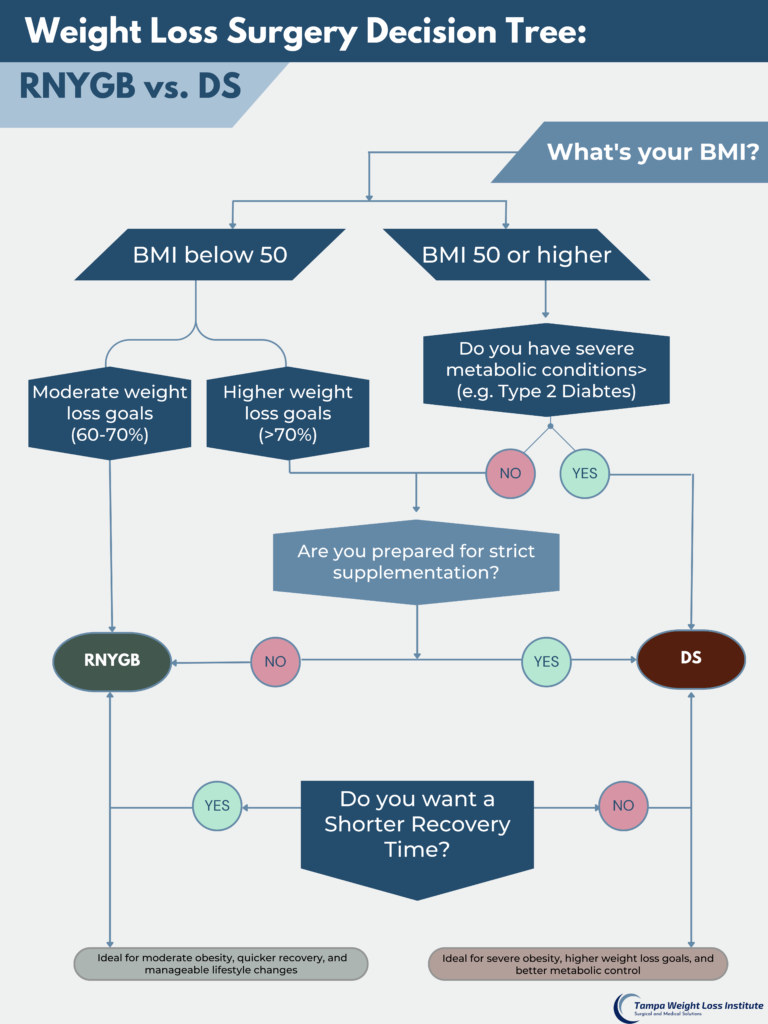
Choosing between Roux-en-Y Gastric Bypass and Duodenal Switch depends on your health goals, BMI, and lifestyle. If you’re looking for a procedure that balances effective weight loss with quick recovery, RNYGB might be right for you. However, if you need more dramatic weight loss or have severe obesity, Duodenal Switch could be a better choice.
At the Tampa Weight Loss Institute, Dr. Amit Taggar and his team will work closely with you to evaluate your unique needs and help you make an informed decision about which surgery is best for your long-term health and weight loss goals. Schedule a consultation today to learn more.
The information provided on this website is for educational and informational purposes only and is not intended as medical advice. Always consult with a qualified healthcare provider regarding any medical concerns, conditions, or treatment options. Individual results may vary. The services described are not intended to diagnose, treat, cure, or prevent any disease. Any medical procedure should be discussed thoroughly with a licensed professional before beginning treatment.
Dr. Amit Taggar is a board-certified, fellowship-trained bariatric surgeon and the founder of Tampa Weight Loss Institute. Recognized globally for his expertise in robotic weight loss surgery, Dr. Taggar specializes in Roux-en-Y gastric bypass, vertical sleeve gastrectomy, duodenal switch, and complex bariatric revisions. He has trained surgeons from around the world and performed live surgical demonstrations at major international conferences.
Committed to empowering patients on their weight loss journey, Dr. Taggar emphasizes a comprehensive approach to long-term success, integrating advanced surgical techniques with personalized aftercare. At Tampa Weight Loss Institute, he leads a team dedicated to transforming lives through compassionate, patient-centered care.